

 YouTube
 Apple Podcasts
 Spotify
 RSS Feed
 Amazon Music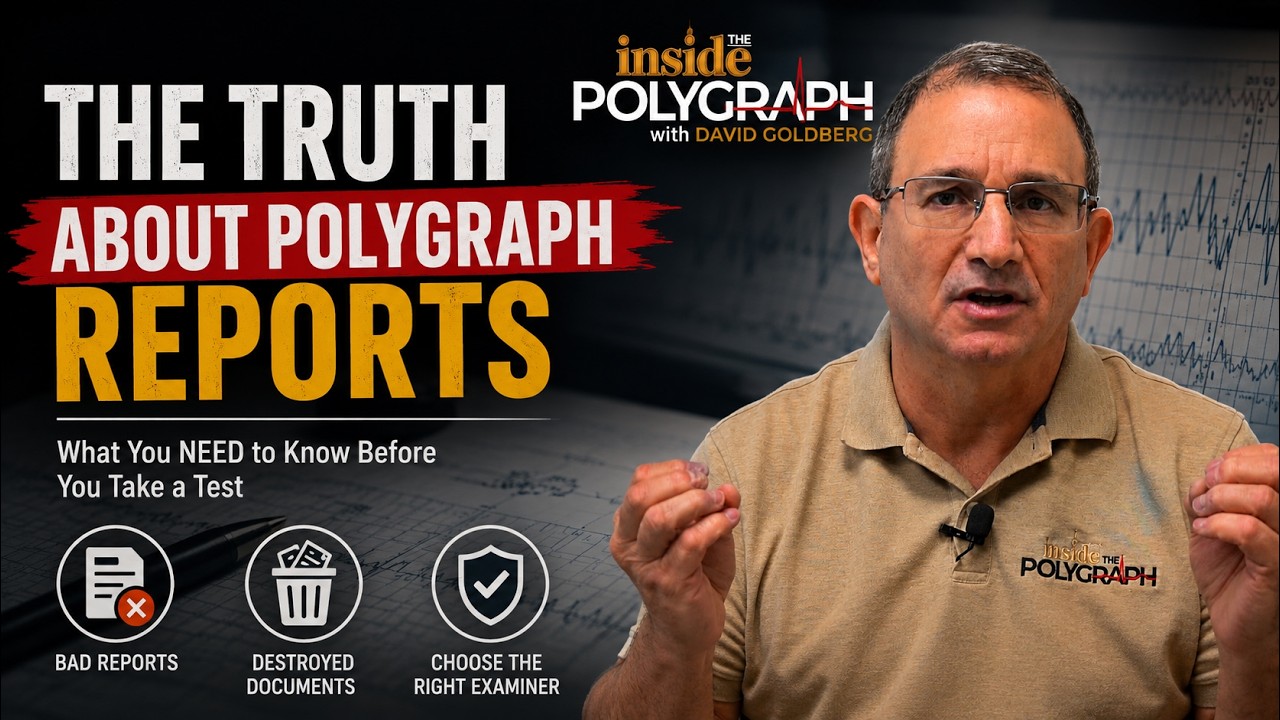
In this episode of Inside the Polygraph, David Goldberg explains why he created the podcast in the first place: to give people real, professional information about polygraph testing so they can make informed decisions, get truthful answers, and finally get closure on the issues that are holding them back.
David uses a shocking real-world example involving a mother in California who sought answers in a serious child sexual abuse matter. After hiring an examiner through a referral service, she was left with no real closure, a poorly written report, and an overall examination process that David describes as a complete sham. He breaks down exactly what went wrong, why the report failed her, and how she eventually found a truly qualified examiner who gave her the professional testing and detailed report she should have received from the beginning.
This episode takes a hard look at one of the most important but overlooked parts of the polygraph process: the written report. David explains what a proper polygraph report should include, why one-page or computer-generated algorithm reports are often meaningless to clients, and how weak documentation can leave people without answers, evidence, or the ability to move forward in legal, personal, or therapeutic settings.
He also addresses a major warning sign that should alarm any client: examiners who destroy notes, charts, and supporting documentation immediately after the examination. David explains why that practice is dangerous, why those records are often critical evidence, and why professional examiners should retain their documentation rather than erase the paper trail.
Throughout the episode, David stresses the importance of taking your time, avoiding referral services, researching the examiner thoroughly, and choosing someone with real credentials, experience, empathy, and professionalism. He reminds listeners that rushing into a test with the wrong examiner can leave them worse off than before, while a properly administered examination by a true expert can provide the clarity and closure they desperately need.
If you have ever wondered what a professional polygraph report should actually look like, how to spot an unqualified examiner, or why some people walk away from a polygraph with more confusion than answers, this episode is essential listening.
The information presented in this podcast is based on the real-life experience and professional expertise of David Goldberg, expert polygraph examiner with Executive Protection Group Polygraph Services, based in Virginia Beach.
📞 Call David at (757) 495-1301 to get started now.
David uses a shocking real-world example involving a mother in California who sought answers in a serious child sexual abuse matter. After hiring an examiner through a referral service, she was left with no real closure, a poorly written report, and an overall examination process that David describes as a complete sham. He breaks down exactly what went wrong, why the report failed her, and how she eventually found a truly qualified examiner who gave her the professional testing and detailed report she should have received from the beginning.
This episode takes a hard look at one of the most important but overlooked parts of the polygraph process: the written report. David explains what a proper polygraph report should include, why one-page or computer-generated algorithm reports are often meaningless to clients, and how weak documentation can leave people without answers, evidence, or the ability to move forward in legal, personal, or therapeutic settings.
He also addresses a major warning sign that should alarm any client: examiners who destroy notes, charts, and supporting documentation immediately after the examination. David explains why that practice is dangerous, why those records are often critical evidence, and why professional examiners should retain their documentation rather than erase the paper trail.
Throughout the episode, David stresses the importance of taking your time, avoiding referral services, researching the examiner thoroughly, and choosing someone with real credentials, experience, empathy, and professionalism. He reminds listeners that rushing into a test with the wrong examiner can leave them worse off than before, while a properly administered examination by a true expert can provide the clarity and closure they desperately need.
If you have ever wondered what a professional polygraph report should actually look like, how to spot an unqualified examiner, or why some people walk away from a polygraph with more confusion than answers, this episode is essential listening.
The information presented in this podcast is based on the real-life experience and professional expertise of David Goldberg, expert polygraph examiner with Executive Protection Group Polygraph Services, based in Virginia Beach.
📞 Call David at (757) 495-1301 to get started now.